
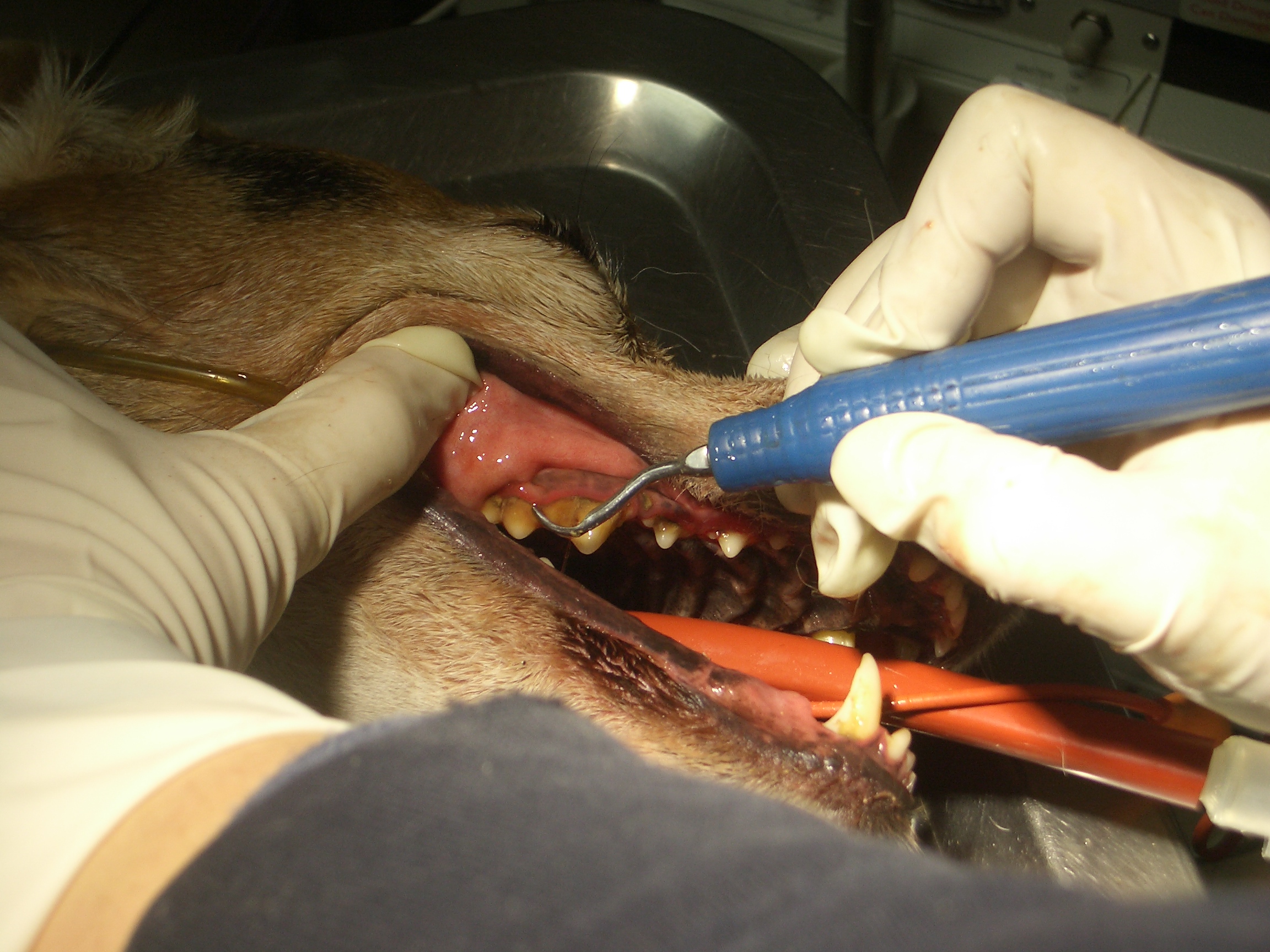
Dentistry
Dental hygiene is an important part of your pet’s health and can often be the cause of serious illness. Dental problems, if left untreated, can often lead to larger systemic problems in your pet due to oral bacteria entering the blood stream and damaging the kidneys, heart and liver.
Pets have dental disease just like you do. Many of these problems can be avoided by bringing your pet to your veterinarian for regular dental check-ups and dental cleanings. Bad breath and / or reddened gums are usually signs of dental problems.

Some Signs of Dental Problems include:
- Bad breath – one of the first signs of dental disease
- A yellowish-brown crust of plaque on the teeth near the gum line
- Red and swollen gums
- Pain or bleeding when your pet eats or when the mouth or gums are touched
- Decreased appetite or difficulty eating
- Loose or missing teeth

Veterinary dentistry is quite different from the equivalent process in people. For most of us, caring for our teeth and gums has been part of our daily routine for as long as we can remember. Consequently, a person's visit to the dentist is relatively brief and does not require sedation. In contrast, veterinary dentistry is considerably more involved, time-consuming and complex. Cleaning a pet’s teeth requires general anesthesia, and consequently a day's hospitalization. The skills of several people, from veterinarians to veterinary technicians and animal attendants are required for each procedure.
After appropriate pre-anesthetic screening, our veterinary staff regularly performs cleanings, scaling, assessment of tooth and gum health and extractions. Teeth cleanings are day long procedures that allow your pet to go home the same day after fully recovering from anesthesia.
Your pet's dental cleaning begins with a physical examination. The exam is important to evaluate your pet's general health. After the physical exam, your pet is given general anesthesia that allows for a safe and painless dental cleaning.
The first part of dental cleaning requires the removal of tartar. This is done with a hand scaler.
Next, a periodontal probe checks for pockets under the gumline where periodontal disease and bad breath starts. An ultrasonic scaler is used to clean above the gumline while a curette cleans and smoothes the teeth under the gumline.
Your pet's teeth are polished, creating a smooth surface. The gums are washed with an anti- bacterial solution to help delay tartar build-up both under the gumline and on the crown of the tooth.
Finally, a fluoride treatment is applied to strengthen your pet's teeth, to desensitize exposed roots, and to decrease the risk of infection.

Home prevention
Dental care does not end with a visit to your veterinarian. You need to continue your veterinarian's good work at home. Brushing your pet's teeth is an important part of home dental care. The staff at Queen City Animal Hospital can show you the proper method of brushing your pet's teeth.
Give your pet complete dental care
Annual veterinary dental care and home dental care will help keep your pet's breath fresh and gums and teeth healthy.
Dental Care Q & A
HOW OFTEN SHOULD I HAVE MY PET'S TEETH CHECKED?
During the first year, your pet should have his / her teeth checked at all puppy and kitten examinations, at the time of spaying or neutering.
Your pet should have an annual checkup for dental health when he / she receives yearly booster vaccines.
DO PETS GET CAVITIES LIKE HUMANS?
Cavities are not as common in pets, but do occur occasionally. Frequently in cats, subgingival caries may form, when the gum lines have receded excessively, exposing the dentin layer that is much softer than enamel.
WHY DOES MY DOG OR CAT HAVE BAD BREATH?
The most common cause of bad breath is excessive tartar deposits on the teeth. Bacteria feed and live in the tartar and produce offensive odors. Tartar is a crusty collection of food particles, minerals, and bacteria that forms at the tooth/gum borders. However, metabolic diseases such as kidney disease, diabetes, etc. can also produce halitosis.
DOES TARTAR ON THE TEETH HURT MY PET?
Yes. As tartar accumulates at the gum line, it causes gum recession and inflammation or gingivitis. This allows bacteria in the tartar to infect and loosen the base of the tooth, causing periodontal disease. In pets, periodontal disease may lead to bacterial infections of the heart, liver and kidneys. Inflammation of the gums and infection of the teeth can cause your pet considerable pain, and his / her appetite and general attitude may deteriorate.
HOW CAN I PREVENT TARTAR BUILDUP?
Feed your pet a well-balanced, commercial diet. Brushing the teeth is an excellent way to check tartar build-up, though once hard plaque has developed, your pet may require teeth scaling and cleaning. Brushing with flavored toothpaste designed for pets, 2-3 times weekly, discourages tartar build-up.
For dogs, Booda bones, Nylabones, or large rawhide chew toys are also helpful as preventative and also aid in stimulation of the gums. If your pet does not let you brush his / her teeth, you might want to try a pre-made mouthwash -. Nolvadent. Alternatively, if you cannot provide maintenance, your pet may require full dental scaling and polishing on a more frequent basis.
WHEN IS DENTAL CLEANING REQUIRED?
Dentistry is required when tartar has deposited and/or when periodontal disease is present. It is also required when substantial mouth odor exists, which indicates infection or decay even if it is not readily apparent.
AFTER THE DENTISTRY, HOW LONG WILL MY PET’S TEETH REMAIN CLEAN?
This depends on diet, dental alignment, amount of gum recession that has already occurred and future care of the teeth. Smaller dog breeds tend to develop tartar much more quickly; in most cases this is a genetic predisposition and not something the owner can readily modify. However, the degree to which the owner provides ongoing dental prophylaxis heavily influences the outcome!